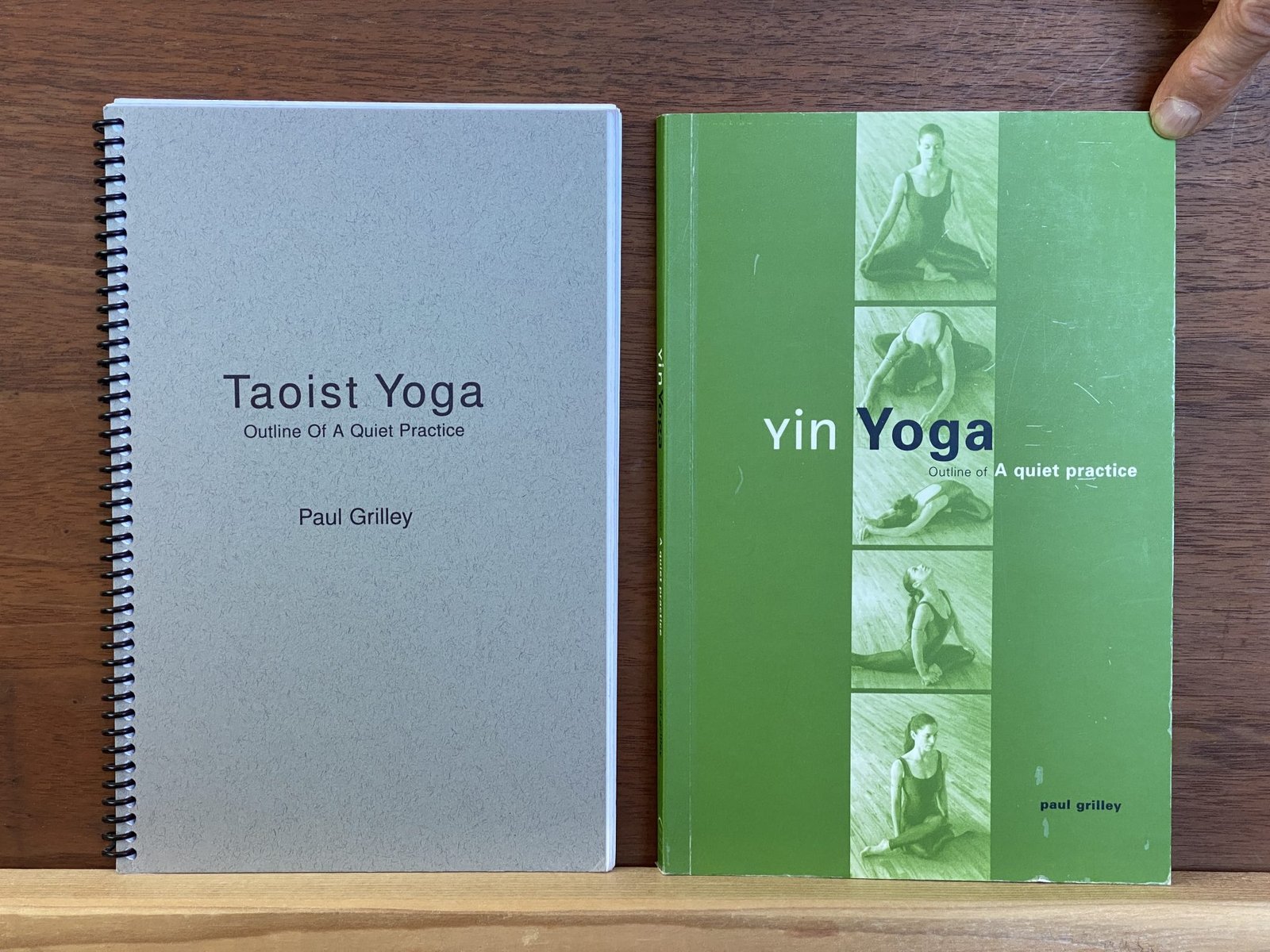
Paul Grilley’s Taoist and Yin yoga books
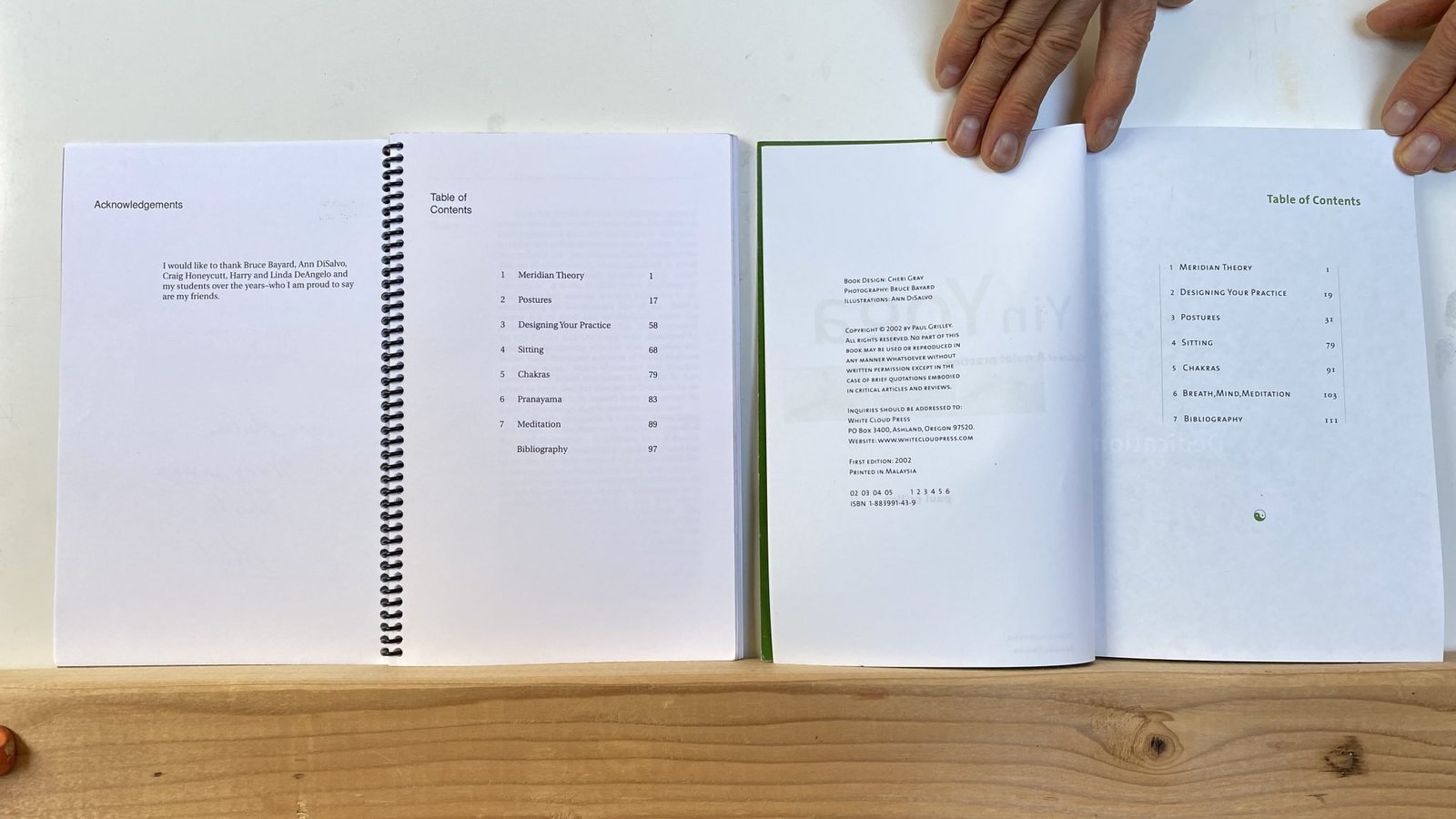
Paul Grilley books comparison- Contents
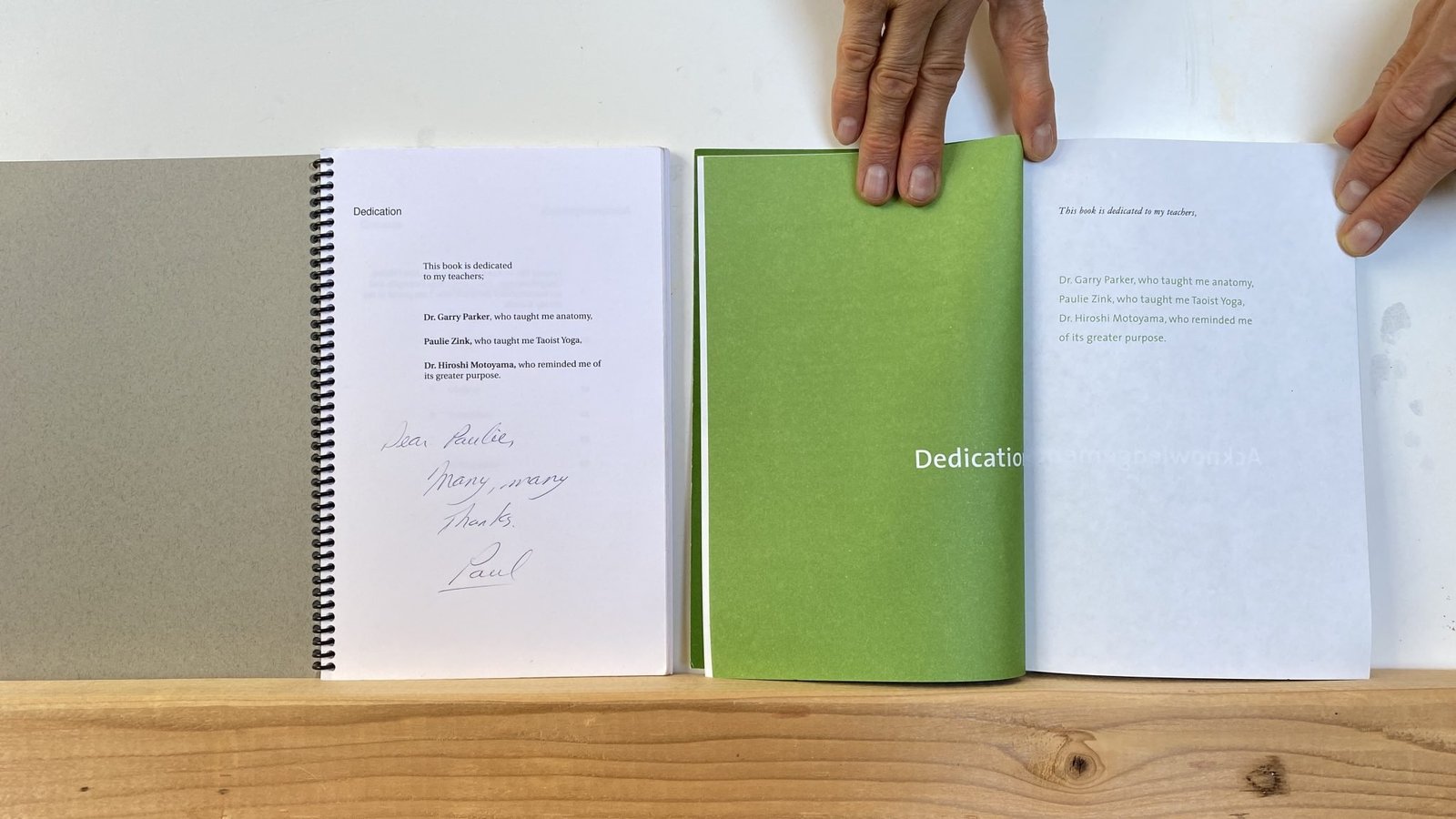
Paul Grilley books comparison- Dedication
Paulie Zink Recognized Founder of Yin Yoga
“Paul Grilley practices and teaches yoga in the Taoist style,
also known as Yin yoga, as taught to him by the martial arts champion
Paulie Zink”
OMpage: Talking Shop with Paul Grilley, By Matthew Sloan
Yoga Journal magazine, June 2003
Rebuttal to the Bernie Clark
Yin Yoga article:
Paulie Zink Doesn't Like
"Popular" Yin Yoga
The following excerpts are from the Bernie Clark Yin yoga website article "Paulie Zink Doesn't Like Popular Yin Yoga" in which he criticizes some comments made by the founder of Yin yoga:
The Bernie Clark Yin Yoga website says,
"Paulie Zink has made several statements critical of the style of Yin yoga developed by Paul Grilley. Comments include:
1) Too much yin is bad.
2) Yin yoga should work the whole body.
The first two concerns take the form of a straw man fallacy. A straw man fallacy presents a statement or assertion that is not part of the position or practice being critiqued. For example, the statement that 'too much yin is bad' implies that the Yin Yoga practice as developed by Paul Grilley is flawed because you should not only do Yin Yoga."
Response:
I'm assuming the Bernie Clark Yin yoga website article is referencing an interview Paulie did for BreakingMuscle.com. (See video below) The following is the context in which Paulie Zink made these statements:
Breaking Muscle: "Will flexibility take away from strength or make somebody more injury-prone?"
Paulie Zink: "It makes people less injury-prone because when you do nothing but strength training you get tighter and tighter. So then if you try to do something with flexibility you pull a muscle. So when you're more fluid and flexible then in conjunction with strength that makes you better balanced. So yin and yang ideally should be a balance of strength and flexibility both equally. So too much yin is bad because then a person is so flexible and soft they don't have muscle tone, and without muscle tone then you can't move [naturally]. To move naturally like an animal does you need strength and flexibility both."
Breaking Muscle: "Well, can a person be too flexible?"
Paulie Zink: "There's no such thing as too flexible as long as you're balanced with strength and fluidity."
Paulie is not making any direct reference here to Grilley's style of teaching Yin yoga in these remarks. It seems to me that Bernie Clark is the one who is propounding a "straw man fallacy."
Bernie Clark Yin yoga website says, "The second straw man is the claim that Yin Yoga should work the whole body, implying that Yin Yoga (Paul Grilley) is only for the lower body. However, in the Yin Yoga (PG) style, upper body stretches are also employed. For example, in the book The Complete Guide to Yin Yoga [by Bernie Clark] there is a section on Yin Yoga for the upper body."
First, let's be clear that Paulie Zink is the one who developed Yin yoga. Paul Grilley learned a fraction of Master Zink's complete art of Yin yoga. Grilley originally taught 26 Yin yoga postures, mostly for the lower body. Bernie Clark has had ample opportunity to learn additional Yin yoga postures taught by Master Zink that Paul Grilley did not learn in his year of study with Master Zink.
Bernie Clark's book The Complete Guide to Yin Yoga was published in 2012. Bernie Clark purchased Paulie Zink's "Beginner's" and "Live Class Sessions 1-4" yoga DVDs on April 16, 2006.
Bernie Clark attended two yoga workshops taught by Paulie Zink in April 2007 and in November 2008 at Semperviva Yoga in Vancouver, BC, when Clark taught weekly classes there. Master Zink started teaching many more postures in these weekend workshops than Grilley learned in the year he studied with Master Zink.
It's worth noting that Bernie Clark and Paul Grilley have had access to various additional resources from Paulie Zink, beyond what they learned from their direct interactions with Paulie. For example, Paulie's Teacher Training manual, initially published in 2009, presents over 75 postures demonstrated by Paulie himself.
Additionally, Paulie's Yin Yoga Basics DVD, released in 2010, features numerous postures beyond the scope of what Paul Grilley learned. And, Paulie's Yin Yoga Trilogy DVD, released in 2014, goes even further, offering a rich collection of poses for both the upper and lower body, many of which Paul Grilley never learned in his classes with Paulie.
Furthermore, Paulie's online presence contributes significantly to his easily accessible Yin yoga resources. Paulie's website showcases several photos of him demonstrating various postures, and his YouTube channel contains demos and class videos, providing a visual guide for learners. When Bernie Clark references the content of his own book it's important to recognize the breadth of material that Paulie has shared over the years since Grilley studied with him.
Some of the students in Paulie's workshops mentioned that they have studied with Paul Grilley or Bernie Clark. It's conceivable other students in Paulie's workshops were also students of Bernie Clark or Paul Grilley but chose not to disclose this information. These students may have shared what they learned from Master Zink with either of them.
Bernie Clark Yin yoga website article argues, "Paulie is asserting that his style of Yin Yoga is the 'genuine' practice while Paul Grilley's style he calls 'commercial' or 'popular' Yin Yoga. This plays off the confusion Paulie created when he renamed his Taoist Yoga practice Yin Yoga. However, Yin Yoga (Paul Grilley) is not a subset or precursor to Yin Yoga (Zink)."
Sarah Powers is the one who renamed Master Zink's yoga, that is to say, the beginner level of Master Zink's complete art of yoga that Grilley learned from Paulie.
Paul Grilley's first book is titled Taoist Yoga: Outline of a Quiet Practice and the second edition of this book is titled Yin Yoga: Outline of a Quiet Practice.
Bernie Clark is confusing the issue. Paulie Zink's Yin yoga is the precursor to Grilley's Yin Yoga. And it's the yoga components of Paul Grilley's Yin yoga which are the subset of Master Zink's style of yoga.
Paul Grilley’s Taoist and Yin yoga books
Paul Grilley books comparison- Contents
Paul Grilley books comparison- Dedication
Paulie Zink Recognized Founder of Yin Yoga
The above photos show both editions of Grilley's first book, the first edition "Taoist Yoga: outline of a quiet practice," the second edition "Yin Yoga: outline of a quiet practice." The table of contents is the same in each edition of the book. The second edition contains all of the same photographs and all of the same postures that are in the first edition. In both editions, Grilley credits Paulie Zink with teaching him Taoist yoga.
Grilley himself has said, "Yin Yoga is not 'yet another' brand name of Yoga postures, it is part of a larger conception of Yoga that can be called Taoist Yoga." PaulGrilley.com, 2008. Originally Paulie referred to his style of yoga as Taoist Yoga. Paulie's master told him there was no word for yoga in Chinese. The flexibility training Paulie learned was part of a much larger system of health exercises designed to increase Chi, or life force. This system is known as Taoist Chi Kung.
Another point of contention Bernie Clark makes is concerning Paulie Zink's comment, "Yin yoga was never meant to be dead yoga." Clark says this is "just mean" and points out that "dead people can't do Yin yoga."
The interview and demo video below* were made by request for BreakingMuscle.com. The questions for the interview were provided by Dan Kallen of Breaking Muscle.
Breaking Muscle: "What defines 'genuine' Yin Yoga?"
Paulie Zink: "Genuine Yin yoga would encompass the energies of the elements and the animals. So it's based on the five transforming energies and then the animal postures. So when you are showing a student say the Dragon posture or the Cross Legged Frog posture you would embody that energy so people could see 'Oh, there's a frog', versus somebody else saying, 'Here, get into this posture and just hold it while I time you'. And the people have no energy. So Yin yoga was never meant to be dead yoga. It was meant to be an alive, powerful form of yoga."
Paulie is an expert in energetics. He emphasizes that the postures and flowing movements are intended to embody the essence of alchemical elements and animal energetics. He is saying that the practice of Yin yoga comes alive when it is infused with these energetic qualities.
Therefore, what lacks animation or vitality is considered inanimate within this context. In other words, by incorporating the energetic elements sourced from alchemy and animal movements, the practice becomes more dynamic and alive.
It has been disheartening to witness what I regard as a deprecating and marginalizing treatment that Master Zink has endured for years from within certain circles of the yoga world and the media. Any discerning person could see that Paulie's unparalleled skill in Yin yoga vastly surpasses that of Bernie Clark and Paul Grilley's. Yet, in my opinion, he has been subjected to prejudice and discrediting tactics by particular individuals who have profited from his teachings. This behavior goes beyond mere disagreement. It seems to be an attempt to downplay the achievements of an individual who has attained profound proficiency in his field. (See post 6 Corrections to Bernie Clark Book)
It is essential to recognize that such alleged tactics of distortion and efforts to discredit Paulie Zink are unfair and suggest an intentional scheme of suppression. This allegedly inappropriate conduct dishonors the authority entrusted to a teacher by his students and audience.
In contrast, many sincere students who have benefited from Paulie's art of Yin yoga acknowledge and appreciate his exceptional skill and contributions to modern-day yoga.
Maria